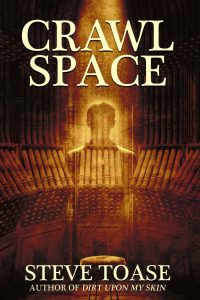
 Crawl Space
Steve Toase
JournalStone Publishing (March 6, 2026)
Reviewed by Andrew Byers
Steve Toase’s Crawl Space is a tightly wound novella of weird horror that takes an obscure real-world technology—abandoned vacuum postal systems—and twists it into something profoundly unsettling. Set in a small German city, the story follows Rachael and Ben, investigators working for the mysterious Durchsickern Institute, as they methodically record and explore disused pneumatic tube networks. What begins as a professional assignment in dusty cellars and forgotten infrastructure soon reveals an impossible space whose very existence defies measurement and logic.
Toase excels at grounding the uncanny in the mundane. The early sections are deliberately restrained, filled with the tactile details of rubble, old documents, and mechanical remnants. This slow accumulation of atmosphere makes the eventual discovery of the Crawl Space all the more disorienting. Once entered, the novella shifts into more visceral territory, where squirming, organic intrusions and impossible geometries create a sense of bodily and spatial violation. The horror feels organic rather than imposed, growing naturally from the characters’ curiosity and the hidden structures beneath the city.
Rachael and Ben are drawn with quiet competence; they are flawed people but their professional partnership provides a solid anchor before the personal stakes escalate. Herr Bettelmein, the enigmatic figure commissioning their work, adds a layer of institutional unease without descending into cartoonish villainy. Toase keeps the focus on the protagonists’ growing disquiet and the practical problems of navigating (and surviving) a space that should not exist.
The novella’s strength lies in its economy. At novella length, every detail serves the mounting tension, and Toase resists the temptation to over-explain the Crawl Space’s origins or nature. The result is a story that lingers in the mind like an itch beneath the skin: uncomfortable, intriguing, and resistant to easy resolution. Themes of hidden infrastructure, the limits of measurement and documentation, and the dangers of venturing into worlds behind the visible one are handled with subtlety rather than over-long exposition.
While some readers may wish for slightly more emotional depth, the novella’s focus on atmosphere and conceptual unease serves its weird-horror aims well. Crawl Space is a confident, distinctive piece of short-form horror that rewards close attention and leaves a lingering sense of architectural and corporeal wrongness. Fans of restrained cosmic or body horror with a strong sense of place will find much to admire in Toase’s excavation of the spaces we think we know.