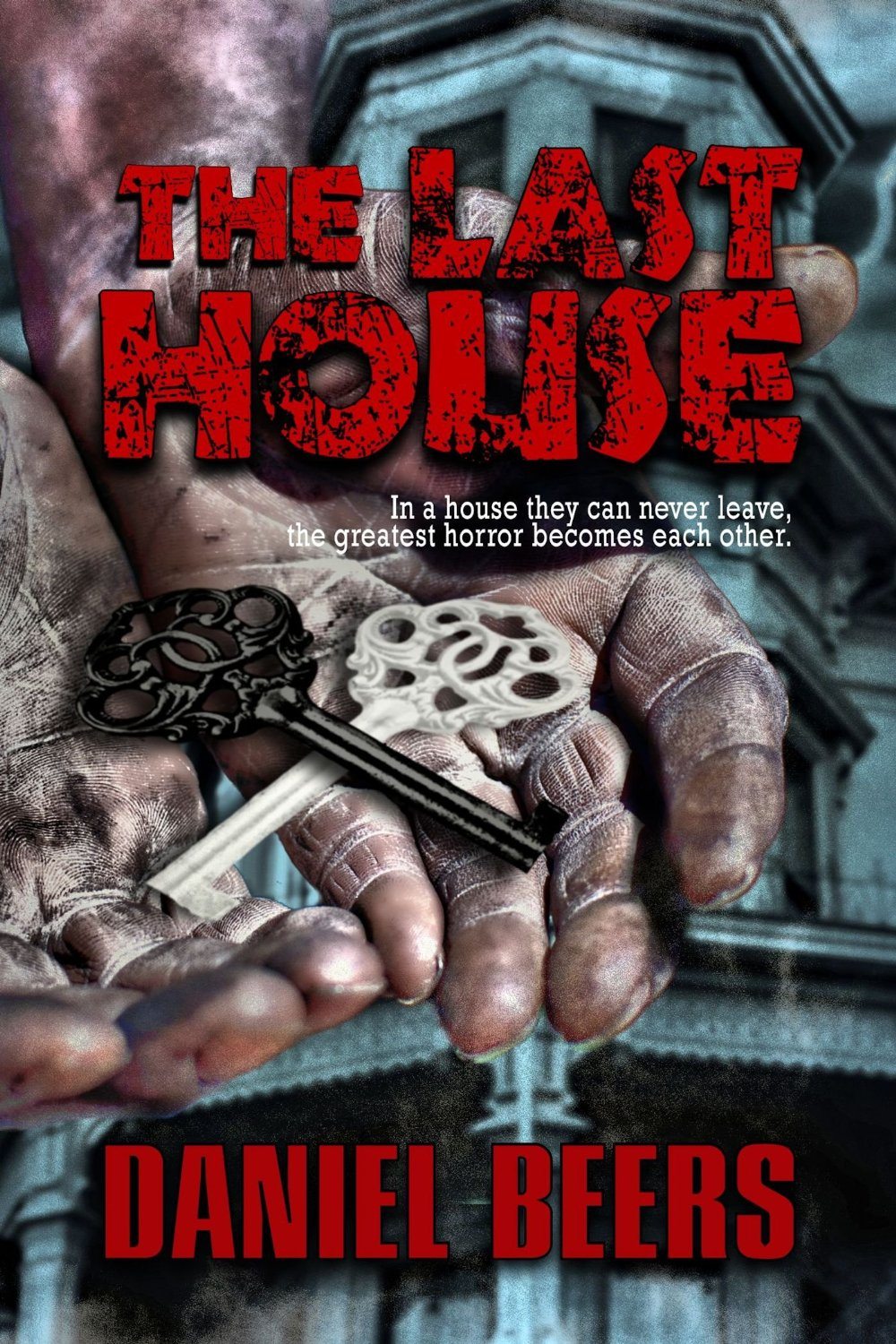
 The Last House
Daniel Beers
Damnation Books LLC
September 24, 2014
Reviewed by Leah Larson
From the first line of Daniel Beers’ The Last House, readers are aware that there is something definitely wrong with Bryan and Julie Dylan’s marriage. Like many couples, Bryan and Julie hope for some miracle that can save their marriage. However, the usual marriage-saving “miracle”—a pregnancy—in this case ends in a miscarriage that is the beginning of their problems. Instead, the Dylans believe that a new house, especially one that seems too good to be true, could put their marriage and their lives back on track. And for a few chapters before they arrive at the house, it does seem like there will be a happy new beginning for this couple. But this is a horror novel, so the happy dream does not last very long.
Although seemingly benign and ordinary, both Julie and Bryan have buried personal secrets, secrets so dark they ensure that nothing–not even a dream house—can save their marriage. When the dream house turns into a nightmare, locking them in and forcing them to face their deepest demons, readers may feel claustrophobic, but it is doubtful they will feel sorry for either character. Even before they reach the house, enough of their secrets have been revealed to make both characters totally unsympathetic. This lack of connection with the characters is actually a brilliant stroke by Beers, and the fact that he is able to make readers so dislike a character who is mourning a recent miscarriage certainly speaks to his talent.
Once the characters are locked inside the house, whatever they most desire or fear—from cigarettes and alcohol to weapons and underage prostitutes—magically appears. Supplies of the characters’ favorite foods and drinks are replenished daily. Bryan and Julie have no idea where the supplies are coming from, as they are totally isolated, with the exception of a creepy neighbor who is sometimes seen through the window. As more time passes, readers learn enough about Julie and Bryan’s secret sins to root for the most sympathetic character in the novel—the house itself. Bryan, in particular, has a sinister past lying beneath his bland surface.
Soon after they arrive at the house, Bryan and Julie are separated. Bryan spends his time in the basement trying to dig his way out. Julie is in the rest of the house, drinking and finding out more about the history of the house. Both experience hallucinations, or maybe visits from demons from their past, that drive them to the brink. Beers creates a haunted house that is at the same time lush and claustrophobic.
Beers manages to avoid many of the clichés of haunted house stories, and those that are present are twisted into something very different. The only weakness is that the subplot about incidents that have happened in the house prior to Bryan and Julie’s arrival seems a bit disconnected after the final plot twist.
Readers who want their horror subtle and without violence should avoid this violence-filled book. However, it is possible that even some readers who do not enjoy violence would appreciate this book. Because both characters are so dislikable, the violence is almost cathartic. Also, both characters give as good as they get, so there is no hint of bias or misogyny.
At the end, Beers provides a plot twist very reminiscent of a classic Twilight Zone episode. This twist provides a final satisfaction, but readers are still left with questions that probably do not need to be answered.
In sum, this book is a good read, especially for those who do not need to have sympathetic characters and who take pleasure in seeing particularly nasty characters get exactly what they deserve.