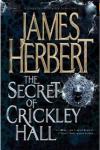
The Secret of Crickley Hall
James Herbert
Tor Books
Trade Paper, 640 pages, $17.99
Review by Sheila M. Merritt
Children and horror: what a killer combination. The notion of imperiled innocence strikes a protective chord. Despicable acts perpetrated on kids get under the skin; they repulse and anger. In The Secret of Crickley Hall, author James Herbert plays on these emotions and expertly turns the screws. He stirs up the scares in the process; beautifully building the intensity of the terrors. While laden with chills, this finely crafted haunted house story is also profoundly moving.
Crickley Hall is an uninviting edifice, yet the Caleigh family move in on a trial basis. Gabe and Eve decide to temporarily get away from London to dislodge painful memories. The one-year anniversary of the disappearance of their son is a grim reminder that the odds of finding him are becoming slim. Despite tenaciously clinging to hope, Eve is diminished and desolate. Her special bond with Cameron, “Cam,” supersedes the feelings she has for the two daughters in the household. When Cam went missing while at a city park, Eve was devastated; blaming herself for briefly dozing off, and losing track of him. Now, in denial of the possibility that he is dead, she looks for answers through psychics and seeks solace in church going.
Fleeing the sorrowful surroundings of their urban life, the clan of four try to adjust to the countryside but find it difficult to embrace their dwelling: “Perhaps it was because they were still grieving that everything seemed so joyless to them. It was a new place, yet it had none of the excitement of a new place, nor of a new beginning.”
Still, Crickley Hall has a resonance for the Caleighs: The site harbored orphaned children evacuated from London during World War II, and tragic events ensued. In 1943, a great flood deeply damaged the rural area and most of the orphans perished. Their bodies were found in the cellar of the building. When Gabe sees a monument to those who died so pitifully young, he succumbs to his own sensations of loss: “And in this plain but emotive memorial to all those lost children was almost the catalyst that bent him, for it confirmed his own despair at the perpetuity of life’s unfailing cruelty – happiness was only in the pauses between suffering.”
Why the corpses were found in the cellar is an enigma: surely, fleeing the flood, the youths would have been instructed to go to higher ground. The Caleigh family become embroiled in the mystery, and find themselves in jeopardy from unseen forces. The usual eerie manifestations occur: unearthly noises, visions, sensitivity to another presence, the weirdly frightened dog, etc. These narrative givens are elevated beyond their predictability by the author’s gift of expression: “The landing light barely infringed upon the gloom of the grand hall below; it was like an umbrageous arena filled with deep blacks and murky greys among which anything might skulk. Yet the sinking mist was clearly visible, as though illuminated from within.”
There is the inherent and inevitable reader’s question of “So, why do the characters choose to remain in such a threatening environment?” Herbert handles this deftly, playing on the good-cop/bad-cop leitmotif: Gabe and Eve alternate in wanting to stay; he, for fluctuating pragmatic reasons, she because of spiritual and maternal motivations. Eve believes that Cam has contacted her in the house; calmed her during a scary encounter. She enlists a local psychic for guidance; a woman very much aware of the strength of the apparitions in residence. A paranormal investigator also appears on the scene, ostensibly to debunk the ghostly rumors. A perfect spectral storm is brewing: The living and dead are primed to converge with a vengeance.
One of the hauntings is a dandy variation on a theme: The often employed scalding hot shower scenario is replaced by an ice cold bath. A tub of heated water suddenly freezes over, trapping the bather. The description of the frigid imprisonment is chilling: “The coldness about her body seemed heavy, hardened, and clamped her limbs, making it almost impossible to move them. And each time she tried to suck in air so that she could scream for help, it was as though a rod of ice had rushed into her throat to stifle any sound.”
While the supernatural elements are superbly rendered, the “secret” of The Secret of Crickley Hall will not surprise most horror readers. There is, however, a splendid unexpected reveal that is extremely well executed. James Herbert doesn’t deviate wildly from the trappings embedded in haunted house novels; but he does brilliantly tweak them. As author and architect of Crickley Hall, he has designed a tale of fright; based on blueprints from the past – and paved it with passion and pathos.

Note: This is the Hellnotes contribution to The Winter Chills Book Review Project which was proposed by Dylan at MonsterLibrarian.com. You can read the other reviews from participating websites by clicking on the links below. But before you do, as always, please let me express my sincere gratitude to Sheila M. Merritt. Hellnotes exists because of those who contribute their talents to its posts. Sheila has been with us from the very beginning of our blog presence, lending her own unique take on many of today’s upcoming and established horror authors. Hellnotes would be a hollow husk without her reviews. She’s that rare reader/writer who not only appreciates the genre, but knows how to reach into the heart of a novel. We’re honored to be able to carry her reviews. Thank you, Sheila!