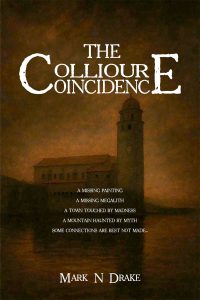
 The Collioure Coincidence
Mark N. Drake
Aethos Publications (March 24, 2026)
Reviewed by Andrew Byers
Mark N. Drake’s The Collioure Coincidence, the sixth installment in the captivating Darkisle series, continues to weave an enthralling tapestry of 1920s detective noir infused with Lovecraftian cosmic horror. Set in the spring and summer of 1925, this novel finds hardboiled private investigator Jack Glennison grappling with personal challenges while unraveling a mystery that spans from the shores of southern France and back to the foreboding island of Darkisle. Drake’s skillful blending of historical authenticity, atmospheric tension, and eldritch unease makes this entry a standout, building seamlessly on the foundations laid in previous books like The Gathering of Shadows (first in the series, and the place from which you should begin your journey to Darkisle) and Bogganmor (the previous novel in the series).
While the series’ recurring cultic menace and island setting could risk repetition, Drake keeps things fresh by venturing off-island and delving deeper into Jack’s psyche, hinting at broader cosmic threats. The first half of the novel involves an excursion to Collioure, France to investigate the King in Yellow—readers of Robert W. Chambers will eagerly await more revelations in future books in the series—before bringing Jack and Josine back to Darkisle for an archaeological expedition. What begins as a seemingly innocuous art inquiry escalates when Jack and Josine uncover links to forbidden tomes, dream-induced madness, and the ever-lurking Church of the Celestial Shadow, a deadly cult whose machinations have haunted the series since its inception.
About halfway through, Drake masterfully shifts the action to the rugged, myth-shrouded landscapes of Darkisle. Here, Jack joins an archaeological dig on Ben Cattrick hill, unearthing a megalithic stone circle. As disappearances mount and cultists close in, Jack must confront malevolent forces, including references to gods like Katlu and Neulthtep, while deciphering runes that could very well summon unspeakable entities. The narrative builds to a gripping climax involving magical rituals, gunfights, and revelations about lost temples, all while exploring themes of fate and the thin veil between reality and the abyss.
Jack Glennison remains a compelling protagonist: a war-scarred, cigarette-smoking everyman, whose cynicism is tempered by loyalty and a reluctant heroism. His dynamic with Josine—part professional partnership, part unspoken affection—adds emotional depth, especially as she grapples with her own traumas from prior adventures. Supporting characters, from the enigmatic (and not entirely trustworthy?) Viscount Charles Deverby to quirky archaeologists like Professor Elvet, enrich the setting, while Drake’s prose evokes the era’s grit with vivid details: the clatter of French trains, the eerie howls of Darkisle’s feral munt hounds, and the oppressive heat of Mediterranean afternoons. The author’s research shines through the many historical touches, such as the Fauvist art movement and Norse influences on Darkisle’s ancient sites, creating an immersive blend of mystery and mythos that fans of H.P. Lovecraft or Dashiell Hammett will devour.
The Collioure Coincidence is a taut, page-turning read that rewards longtime followers with callbacks to earlier cases while standing alone as a thrilling story in its own right. Drake continues to excel at crafting creepy, character-driven tales that linger like shadows on a foggy Darkisle night. Highly recommended for those who crave intelligent horror with a detective twist. Here’s hoping Jack’s adventures continue.